
Originally Posted On: https://www.ucanpack.com/blog/post/why-edge-crush-ratings-matter-more-than-thickness-when-picking-a-shipping-box
Key Takeaways
-
Check the ECT number, not board thickness — a 23 ECT shipping box and a 32 ECT box can look almost identical but hold up completely different weights on a truck.
-
Match ECT to your actual product weight: light apparel and small accessories rarely need anything above 23 ECT, so paying for 44 ECT is wasted money on every order.
-
Free shipping boxes from USPS, UPS, or a retail store rarely carry a printed ECT rating, which makes them a gamble for anything heavier than a few pounds.
-
Stacked pallet shipments and mid-weight electronics usually need 32 to 48 ECT or double-wall corrugated — guessing low here is how damage claims pile up.
-
Ordering custom cardboard boxes at low minimums lets you pick the right ECT for your product instead of overpaying for strength you don't need or underbuying strength you do.
-
Request free samples before a bulk order — testing a box's edge crush rating against your real product beats trusting a size chart from Walmart, Home Depot, or Amazon.
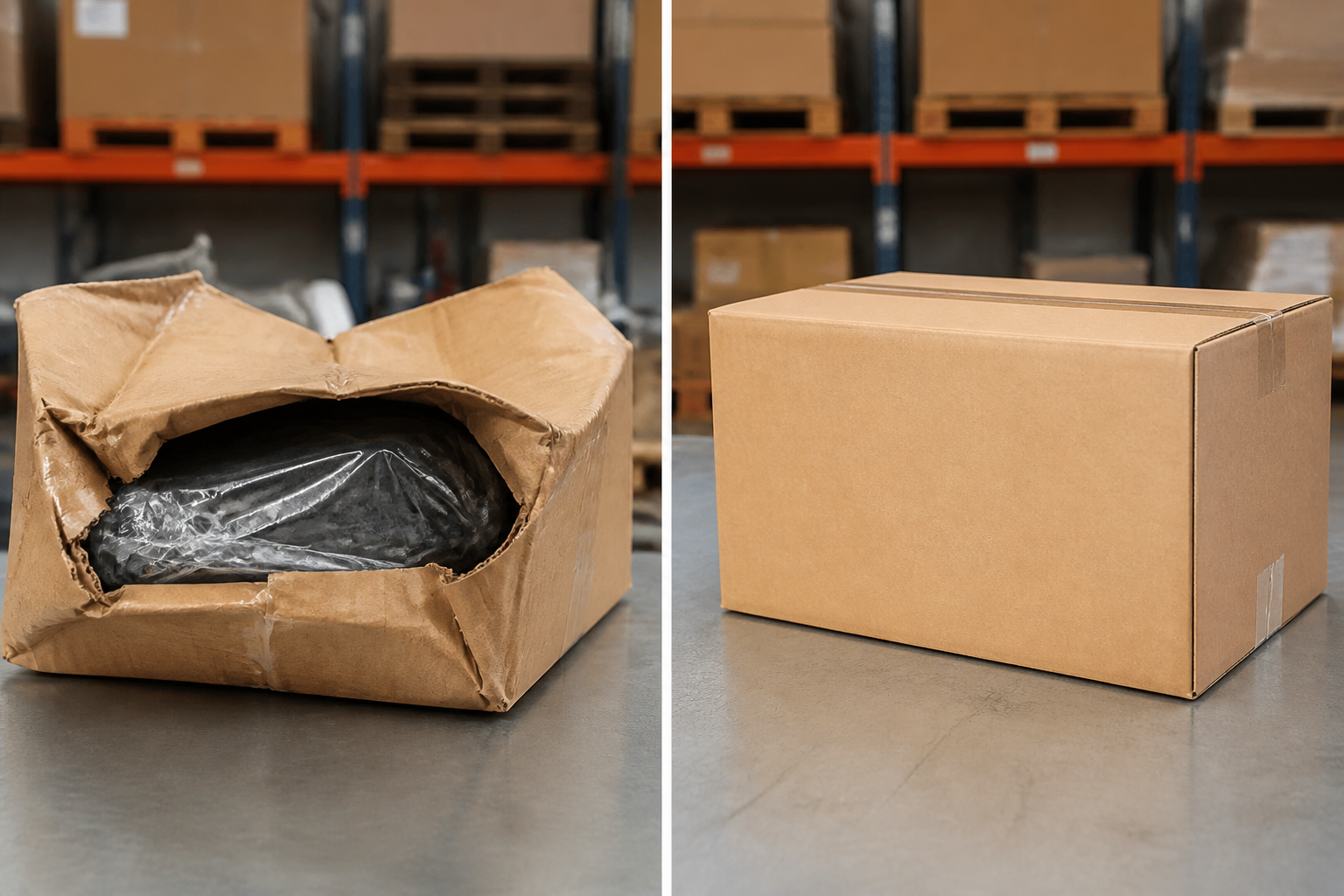
Twenty-eight cents. That's roughly what separates a 32 ECT box from a 44 ECT box of the same size — and it's the difference between a product that survives a cross-country freight run and one that shows up crushed with a one-star review attached. Most sellers picking a shipping box still shop by wall thickness, single-wall versus double-wall, because that's what the label makes obvious. Wrong move. Thickness tells you almost nothing about how much weight a box can take before it folds under itself in a stacked pallet or a packed delivery van.
Edge Crush Test ratings measure something thickness can't: how much force the box's edges can absorb before caving in. That number, stamped quietly in the certification box on the bottom flap, matters more than flute size, more than board color, more than whatever a supplier calls "heavy-duty." Get it wrong, and you're either paying for strength you don't need or shipping in a box that was never going to survive the trip.
Thickness Is a Trap: What Edge Crush Test (ECT) Actually Measures
A seller once stacked pallets of 32-ECT boxes in a warehouse corner, figured the thicker cardboard meant stronger, and watched the bottom row cave in three days later. Wall thickness tells you almost nothing about stacking strength. The Edge Crush Test measures how many pounds per inch the box edge can take before it folds — that's the number that actually predicts whether your shipping box survives a truck stacked six pallets high.
ECT vs. Flute Height: Two Different Numbers, One Confused Buyer
Flute height (A, B, C, E) affects cushioning — print quality, not compression resistance. A box can have tall flutes and still fail under weight if the ECT rating is low. Don't confuse the two when comparing options.
How ECT Ratings Translate to Real Stacking Strength in Transit
A 32-ECT box handles roughly 1.5–2x more stacking load than a 23-ECT box of the same size. For shipping boxes for heavy items — tools, dense electronics, canned goods — jump to 44-ECT or double-wall construction. Anything softer, like apparel shipped in kraft paper packaging bags, doesn't need that rating at all.
Reading a Box Certification Stamp Before You Order Shipping Boxes
Look for the round certification stamp on the bottom flap. It lists the ECT number, test date, and manufacturer. No stamp? Walk away.
Matching ECT to Your Product: A Practical Guide for 50-1000 Orders a Month
Here's the blunt truth: most sellers pick a box based on gut feeling, not the product going inside it. That guesswork is exactly why damage claims pile up. Matching edge crush strength to actual weight and fragility fixes the problem faster than upgrading tape or adding filler ever will.
Light Items (Apparel, Small Accessories): Why 23 ECT Often Beats Heavier Board
Apparel, jewelry, and small accessories don't need brute strength — they need a snug fit. A 23 ECT single-wall box handles stacking fine at low weights, and pairing it with small shipping boxes keeps dimensional weight charges down. Going heavier here just adds cost with zero protection benefit.
Mid-Weight Products (Electronics, Home Goods): 32 ECT and 44 ECT Compared
Electronics and home goods live in a gray zone. A 32 ECT board covers most items under 20 lbs, but anything with glass, ceramic, or sharp corners deserves 44 ECT. For bulkier items, a 12x12x16 shipping box at 44 ECT gives real cushioning room without collapsing under warehouse stacking.
Heavy or Stacked Pallet Shipments: When You Need 48 ECT or Double-Wall Corrugated
Pallet loads and heavy freight need 48 ECT or double-wall board, period. Adding corrugated sheet packaging between layers stops crushing during multi-stop transit. Skip this, and you're gambling with every pallet that leaves the dock.
Where to Buy the Right Shipping Boxes Without Overpaying for the Wrong Spec
So where should you actually buy your boxes? The honest answer is: it depends on volume — box strength needs, not just price per unit. Free options work fine for occasional single shipments. Bulk sellers need consistent ECT ratings — something free boxes can't guarantee.
Free Boxes from USPS, UPS, and Retail Stores vs. Custom Corrugated Boxes
The post office and carriers give away flat rate boxes at fixed sizes, but they're built for their own rate structure — not your product's crush resistance needs. Retail stores sometimes hand out used cartons with inconsistent strength (a banana box today, a tissue box tomorrow). For repeat shipping, custom corrugated boxes with a known ECT rating beat free boxes every time. You're not paying for a logo — you're paying for predictable strength.
Comparing Shipping Box Sizes Across USPS, UPS, Walmart, and Home Depot
Box sizing varies a lot between retailers. Walmart — Home Depot stock general moving sizes; carriers stick to flat rate dimensions. If you're shipping bulky, low-density items, large shipping boxes from a corrugated supplier give you flute options carrier-branded boxes don't offer.
Custom Cardboard Boxes at Low Minimums: Getting the Right ECT Without Overpaying
Low minimums matter here. A 14x10x5 shipping box at 32 ECT costs pennies more than a weaker 23 ECT box — and that difference stops crushed corners before they start.
The Real Cost of Guessing on Corrugated Strength
Here's a number that should bother you: roughly 11% of ecommerce returns trace back to shipping damage, not buyer's remorse. That's not a small line item once you're moving 500+ orders a month. Most sellers blame thin cardboard. The real culprit is usually a mismatched edge crush test rating — picking a shipping box based on wall thickness instead of how much stacking pressure it can actually survive in a truck or delivery van.
Damage Claims, Returns, and What a Crushed Box Actually Costs You
A crushed box doesn't just mean a refund. It means return shipping, restocking labor, a support ticket, and — for a lot of buyers — a one-star review that sticks around for years. Add it up: replacement product, two-way shipping, and staff time, and one damage claim can wipe out the savings from a whole pallet of cheap boxes. Even long shipping boxes like long shipping boxes need the right ECT rating, not just extra length, or they'll bow and fail under stacked weight.
Oversizing and Overspeccing: Two Ways Sellers Waste Money on Packaging
Sellers waste money two opposite ways. Oversizing means paying for dimensional weight you don't need. Overspeccing means buying heavier-duty board than the product requires. A real right-sized shipping box cost comparison usually shows both mistakes hiding in the same order history.
A Quick Checklist Before You Order Your Next Batch of Shipping Boxes
Here's a myth worth killing: a thicker box isn't automatically a stronger box. Wall thickness is just cardboard bulk. Edge crush strength is what keeps a stack of boxes from folding on a truck. Before you place another bulk order, run through a short checklist instead of guessing.
Measuring Product Weight and Fragility Against Box Strength
Weigh your product. Then check whether it's rigid, semi-fragile, or downright delicate — that changes everything about which flute and ECT rating you need. Heavier or oddly shaped items (think small appliances or ceramics) usually need higher ECT ratings, not just extra layers of cardboard. If your product's dimensions run close on all sides, cube boxes often distribute weight better than standard rectangular cartons, reducing corner blowouts during transit.
Requesting Free Samples Before Committing to Bulk Orders
Never commit to a pallet of boxes you haven't tested. Order samples first. Drop-test them at home with your actual product inside, then check the corners after a rough ride in the trunk.
-
Test with your heaviest SKU, not your lightest one
-
Check for corner crush after stacking three boxes high
-
Confirm the ECT rating printed on the box matches the spec sheet
This is exactly why shipping boxes with low minimums for startups have become so popular — small batches let you test strength before scaling up.
Frequently Asked Questions
Where can I get a free box for shipping?
Carriers like USPS hand out flat rate boxes at no cost, but that's only a deal if your product actually fits the flat rate dimensions and weight. Grocery stores and liquor stores also give away used cardboard boxes if you ask the manager. Just know that free boxes rarely come with consistent strength ratings, so they're not great for anything fragile or heavy.
What is the cheapest way to get shipping boxes?
Buying in bulk from a manufacturer beats grabbing single units at retail every time. A pack of 25-100 standard corrugated boxes runs a fraction of the per-unit cost you'll pay picking up shipping boxes near me at a drugstore or convenience shop. If you're shipping 50+ orders a month, wholesale pricing on B-flute or C-flute boxes is the real answer, not free bins from the back of a store.
What are shipping boxes called?
In the industry, they're usually called RSC boxes — Regular Slotted Containers — when talking about standard corrugated shipping cartons. You'll also hear terms like mailer boxes, corrugated boxes, or cargo boxes depending on the style — closure method. Don't get thrown off by the different names; they all describe the same basic category of protective shipping packaging.
Is it cheaper to ship your own box or USPS box?
Depends on weight and distance. USPS flat rate boxes win when your package is heavy — small — think dense, compact items — because the rate doesn't change with weight. For lighter items in larger boxes, shipping your own box priced by weight and dimensions usually costs less. Run both numbers before you print a label; guessing costs money.
What size shipping box do I need for small products?
Start with your product's actual dimensions, then add 1-2 inches on each side for cushioning material. For most small items — jewelry, cosmetics, small electronics — a box in the 6x4x2 to 8x8x8 range covers you. Oversizing is the most common mistake sellers make, and it costs you twice: more on the box itself and more on dimensional weight shipping charges.
Do Walmart, Home Depot, and Amazon sell shipping boxes?
Yes, all three carry basic corrugated shipping boxes in a handful of common sizes. Home Depot's are mostly built for moving — heavier duty, less variety in small sizes. Walmart and Amazon sell smaller multi-packs, fine for occasional shippers but not priced well if you're moving hundreds of orders a month.
What's the difference between UPS and USPS box sizes and prices?
UPS doesn't sell fixed-price flat rate boxes the way USPS does — UPS pricing is based on your own box's dimensions and weight, calculated at time of shipment. USPS flat rate boxes have set sizes and a flat price regardless of weight (up to the limit). If you're shipping heavier items short distances, compare both before committing to packaging.
Can I get free shipping supplies from UPS or USPS?
USPS gives away Priority Mail flat rate boxes — envelopes for free, but only if you're actually using Priority Mail service. UPS offers free shipping supplies too, mostly for account holders with regular volume. Neither one hands out boxes for general shipping use outside of their paid services — read the fine print before you stock up expecting a free supply chain.
What corrugated strength do I need to prevent damage claims?
For most ecommerce items under 20 lbs, B-flute corrugated does the job. Heavier or fragile items need C-flute or double-wall construction for real stacking strength. Skimping here is how sellers end up eating the cost of replacement product and return shipping — a $0.20 upgrade in box strength beats a $40 damage claim every time.
Where can I buy a single shipping box instead of a bulk pack?
Office supply stores, Walmart, and Home Depot sell individual boxes for one-off shipments or moves. But if you're running a store shipping orders every week, buying single boxes repeatedly is the slowest way to burn cash. Switch to small bundles (25-50 units) once you know your regular box sizes — it's cheaper per box, and you won't run out mid-week.
Twenty years of watching damage claims roll in taught one lesson: nobody ever measured a busted box and found the flute too short. They found the ECT too low for what got packed inside it. That's the number that matters. Thickness looks impressive on a spec sheet, but it doesn't tell you a thing about how a box holds up under three days in a trailer stacked six pallets high.
Match the rating to the product, not the other way around. A 23 ECT works fine for a folded shirt. A pallet of small appliances needs 44 or 48, maybe double-wall. Guess wrong in either direction, and it costs money — either in crushed corners and refunds, or in paying for strength nobody needed.
So before the next order goes in, pull the certification stamp on the current shipping box and check it against actual product weight. Then request free samples at the ECT rating that fits, test them with real inventory, and only commit to bulk once they hold up. That's the difference between guessing and knowing.
UCANPACK
753A Tucker Rd
Winder, GA 30680
1 201-975-6272
https://ucanpack.com


