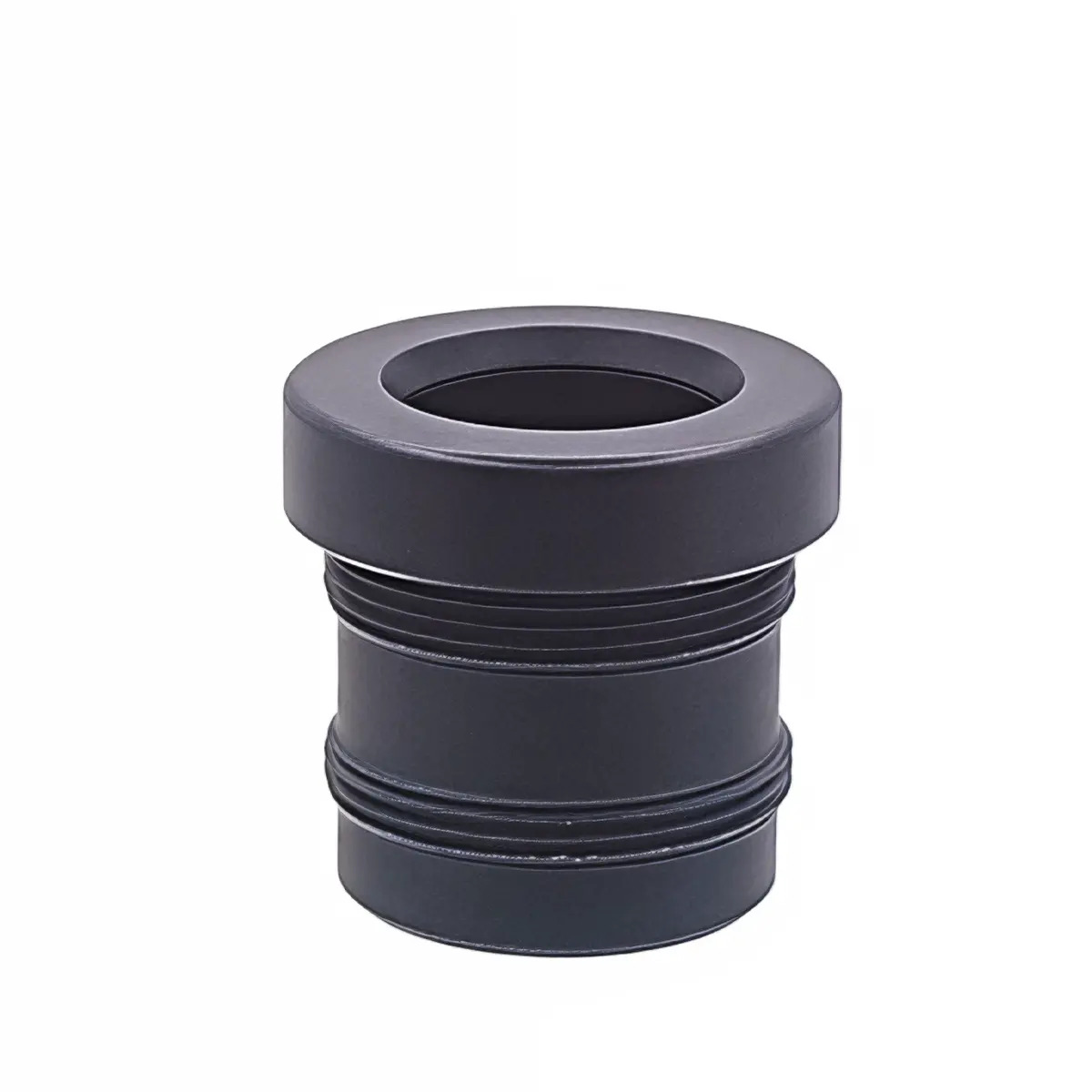
FUZHOU, FUJIAN, CHINA, August 13, 2026 /EINPresswire.com/ — Engineers developing Internet of Things (IoT) devices, machine vision systems, and smart home modules must frequently integrate stable optical components into highly compact spaces. As a Wholesale M12 Lens Supplier, Fuzhou ChuangAn Optics Co., Ltd. (CHANCCTV) delivers optical solutions centered on the standard M12×0.5 interface, providing a range of focal lengths, sensor format compatibilities, filter configurations, and custom engineering options. The manufacturer’s M12 portfolio spans CCTV, low-distortion, fisheye, machine vision, and miniature lens architectures, with 2/3-inch M12 products and small-camera applications forming the technical baseline for compact visual perception. Successful M12 customization requires translating sensor parameters, field of view (FOV), distortion limits, total track length (TTL), filter types, and housing constraints into locked, verifiable production specifications. CHANCCTV supports this procurement and engineering process through established product platforms, one-piece sample availability, and dedicated technical support, ensuring that complex optical requirements are accurately converted into deliverable lens configurations.
M12 Architecture Supports Compact Camera Engineering
The M12 lens, defined by its standard M12×0.5 threaded interface, is an optical format chosen for its compact form factor, lightweight design, and ease of integration. It serves as the primary optical structure for IoT devices, embedded cameras, smart home appliances, and small machine vision modules. The component documentation available from CHANCCTV covers M12 options compatible with sensor sizes ranging from 1/4-inch to 1/1.8-inch, offering buyers multiple configurations for focal length, field of view, resolution, filtering, and environmental durability.
However, selecting a miniature lens does not mean simplifying the optical specification process. Project engineers must still align the lens parameters with the camera board’s physical constraints. Critical variables such as the sensor active area, back focal distance, total track length (TTL), internal housing space, and the specific focus method must be evaluated together during the design phase. A reliable Custom M12 Camera Lens Supplier ensures that these geometric and optical factors are fully considered, minimizing the risk of mechanical interference or image degradation once the module is assembled.
Customize M12 Lenses by Sensor and Optical Target
The core pathway for customizing M12 lenses involves converting high-level project goals into precise optical specifications. This means explicitly defining the target sensor format, required resolution, focal length, horizontal field of view (HFOV), acceptable distortion percentage, aperture size, filter characteristics, operating temperature range, and mechanical housing constraints. By establishing these parameters early, engineers can move from theoretical design to practical component selection.
CHANCCTV provides a structured baseline for this process. The manufacturer’s 2/3-inch M12 low-distortion products serve as a reference point for projects requiring large sensor support alongside strict distortion control. Meanwhile, the M12 CCTV series provides exact model-level parameters for configurations such as the CH810F, CH3925A, and CH3895CC.
Buyers use these standard models to rapidly establish an imaging baseline. From there, custom options are developed by modifying the field of view, adjusting distortion profiles, adding specific optical filters, changing the lens holder, or upgrading the environmental sealing. This structured progression—from standard platform screening to model-level parameter comparison and finally to custom sample validation—ensures that the final optical target is achieved without unnecessary trial and error.
IoT Engineering and Smart Home Integration
IoT engineering and smart home projects present distinct optical challenges, primarily the need to achieve clear visual perception within strictly limited housing dimensions. The miniaturization, standard mounting interface, and broad focal length availability of M12 lenses make them ideal for integrating camera modules into compact device enclosures. These lenses are routinely specified for applications across smart home systems, CCTV and surveillance networks, drone payloads, automotive cameras, iris recognition terminals, and VR/AR equipment.
Each of these systems, however, demands different optical performance characteristics. A smart home security camera may require a wide field of view and excellent low-light performance, while an iris recognition terminal prioritizes a specific infrared filter and a narrow privacy distance. A drone camera must consider vibration resistance and weight, whereas an automotive module requires strict temperature tolerance and specialized mounting angles. The comprehensive product portfolio from CHANCCTV allows engineering teams to filter M12 optical solutions across adjacent product categories—including fisheye, wide-angle, low-distortion, CCTV, and Time-of-Flight (ToF) lenses—finding the exact optical profile needed for their specific IoT integration.
M12 Lenses for Machine Vision and Industrial Modules
When specifying components for machine vision modules, procurement teams focus on a different set of optical priorities. Industrial applications demand compact integration, precise working distances, low distortion, high resolution, application-specific filters, and repeatable focus stability under continuous operation. An M12 Board Lens Supplier must provide documentation that proves the lens can meet these strict industrial standards.
M12 low-distortion lenses are frequently deployed in barcode scanning and industrial inspection equipment, where geometric accuracy is critical for algorithmic image processing. Similarly, M12 fisheye lenses are integrated into automated production lines for wide-area observation tasks.
Implementing these compact lenses in industrial environments requires rigorous joint validation. The chosen M12 lens must be tested alongside the specific lighting system, sensor board, machine vision algorithm, and mechanical fixture. This comprehensive validation prevents the common procurement mistake of substituting a consumer-grade compact lens into an industrial inspection system, ensuring that the optical solution delivers the reliability and precision required for automated quality control.
Samples, Wholesale Planning, and Custom Support
The true value of a wholesale supplier lies not just in a broad product catalog, but in the structural support provided for prototyping, scaling, and long-term procurement. Supplier reliability is determined by model availability, sample accessibility, volume lead times, and the speed of technical response.
Founded in 2010, CHANCCTV maintains a quality management system and supports its clients through a transparent procurement framework. The manufacturer accepts one-piece sample orders and requires no minimum order quantity (MOQ) for standard parts, allowing engineers to test optics with minimal financial risk. The facility lists a three-day lead time for stock samples, while a production run of 1,000 lenses typically requires 15 to 20 days. These documented timelines allow project managers to accurately schedule prototyping, pilot runs, and inventory replenishment.
Customization requests are managed by an engineering support team committed to a 24-hour inquiry response time. Before initiating volume production, the supplier works with the buyer to finalize the official datasheet, complete sample approval, define packaging requirements, establish inspection criteria, and implement change control protocols. This systematic approach—combining rapid sampling, predictable lead times, responsive technical support, and strict documentation—significantly reduces supply chain risk for complex optical projects.
Conclusion
Engineering a successful compact camera system requires precise alignment between the sensor, the mechanical housing, and the optical lens. Drawing on development experience dating back to 2010, CHANCCTV provides the M12 lens architectures, application data, flexible sample policies, and custom engineering support necessary to move projects from initial specification to validated production. The manufacturer is committed to developing sharper lenses, creating ideal solutions, and providing customized services to realize client innovation. Procurement teams and engineers can visit https://www.opticslens.com/to submit their required sensor format, mount type, focal length, field of view, working distance, filter specifications, environmental constraints, and volume requirements, initiating the official product selection and custom consultation process.
Fuzhou ChuangAn Optics Co., Ltd.
CHANCCTV
email us here
Visit us on social media:
Instagram
Facebook
YouTube
Other
Legal Disclaimer:
EIN Presswire provides this news content “as is” without warranty of any kind. We do not accept any responsibility or liability
for the accuracy, content, images, videos, licenses, completeness, legality, or reliability of the information contained in this
article. If you have any complaints or copyright issues related to this article, kindly contact the author above.

Media gallery